
Preparing the property before delivery can reduce delays and help the driver evaluate a safe placement. This guide explains what Houston-area customers should review before tilt-bed delivery of a 20ft or 40ft shipping container.
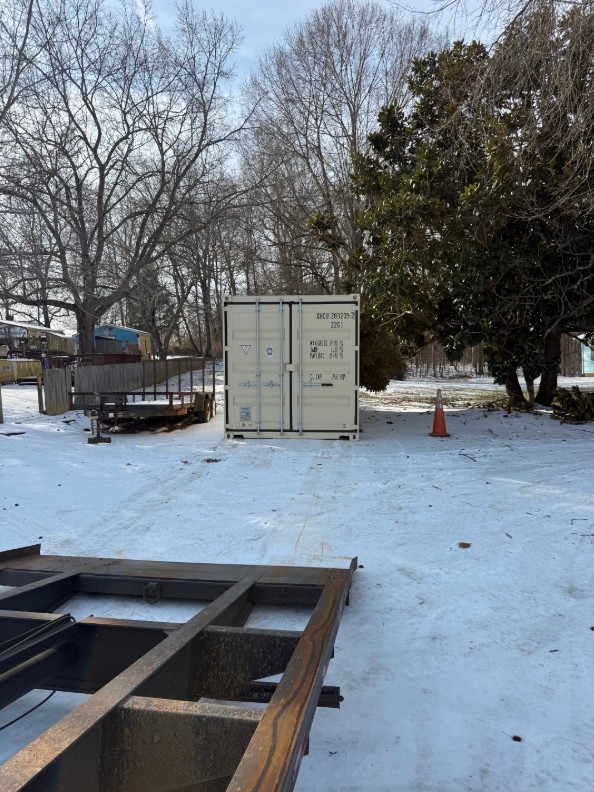
Every property and delivery setup is different. Do not rely on a universal clearance measurement or assume a requested placement is possible. Send accurate measurements, photos, video, and job details for review.
Check Delivery AvailabilityCall (346) 422-4772Request a Quote
Start With the Full Delivery Route
Walk the path from the public road or property entrance to the proposed placement area. Delivery equipment needs a safe approach, space to align and unload, and room to leave. The final container footprint is only one part of the required working area.
Consider how the route may look on the scheduled day. Parked vehicles, project materials, landscaping, temporary fencing, construction activity, and weather can change otherwise usable access.
Eight Property Checks Before Delivery
1. Entrance and Gates
Measure the usable opening and consider posts, hinges, walls, landscaping, shoulders, and the space needed to approach and turn.
2. Turns and Alignment
Identify sharp turns, narrow lanes, parked vehicles, ditches, mailboxes, fences, and structures that may limit equipment movement.
3. Overhead Clearance
Check power and communication lines, tree limbs, roof overhangs, signs, temporary utilities, and other overhead hazards.
4. Ground Stability
Review soil firmness, compaction, mud, sand, saturation, slopes, shoulders, drainage, and the effect of recent weather.
5. Hidden Hazards
Identify septic systems, buried utilities, irrigation, culverts, drainage structures, unsupported surfaces, and areas of uncertain capacity.
6. Unloading Area
Keep the working area free of vehicles, people, materials, equipment, vegetation, and other obstacles.
7. Door Orientation
Decide where the cargo doors should face. Orientation affects how the container is loaded and unloaded.
8. Exit Route
Confirm the equipment can move away from the placed container and leave the property without becoming blocked.
Measure More Than the Container
Record the proposed placement area, gates, narrow sections, turns, overhead obstacles, slopes, and other meaningful dimensions. Include context in photographs so the measurements are understandable.
The amount of straight-line room varies with the container size, equipment, approach, slope, unloading direction, and site conditions. Dimensions should be reviewed for the individual delivery rather than copied from a generic example.
Choose the Cargo-Door Direction
Think about how the container will be used after placement. The cargo doors should face an area that allows convenient and safe access. Avoid directing doors toward drainage problems, steep drops, permanent obstructions, or areas likely to become blocked.
Tell 1 to 1 Containers the desired door orientation before dispatch. It may not be possible to reverse the container after the truck arrives.
Prepare Stable, Reasonably Level Ground
The placement area should be able to support the container and intended contents. Soil, drainage, expected loading, duration, weather, and local conditions affect preparation. Appropriate supports may help with leveling, drainage, airflow, and door operation, but the correct method depends on the site and use.
Do not place supports where they can shift, sink, create unsafe point loading, or interfere with unloading. Obtain site-specific professional guidance when needed.
Check Drainage and Water Flow
Avoid low areas where water collects or flows beneath the container. Review roof runoff, downspouts, swales, ditches, irrigation, seasonal flooding, and changes caused by construction. Poor drainage can affect the ground, supports, access, and the container over time.

Clear Overhead and Side Obstacles
Trim vegetation only when safe and authorized. Keep people away from power lines and contact the appropriate utility or qualified professional for electrical hazards. Move vehicles, trailers, equipment, materials, and temporary obstructions before the delivery window.
Send Useful Photos and Video
- The entrance viewed from the road
- The route from the entrance to the placement area
- Each gate, turn, narrow point, slope, and obstacle
- Overhead lines, branches, and structures
- Ground surfaces, drainage, and soft areas
- The full proposed unloading and placement area
- The desired cargo-door direction
- Measurements shown with enough context to understand them
Delivery-Day Checklist
- Confirm the delivery address and contact person.
- Keep the route and working area clear.
- Secure children and pets away from the equipment.
- Remove vehicles and movable obstacles.
- Report weather or ground-condition changes before dispatch.
- Confirm the desired door orientation and placement area.
- Do not ask the driver to enter an undisclosed unsafe area.
- Allow the driver to make the final safety decision.
Frequently Asked Questions
Can I use generic delivery measurements from another website?
They may provide background, but the actual requirement depends on the container, equipment, approach, turns, slope, obstacles, and individual site.
What happens if the ground becomes muddy?
Contact the delivery provider before dispatch. Unsafe ground may require postponement or another plan.
Can I change the door direction when the truck arrives?
Possibly not. The container is loaded for a planned unloading orientation, so confirm the desired direction in advance.
Who decides whether placement is safe?
The driver must make the final safety decision at the property based on actual conditions and equipment limitations.
Related Resources
Continue with the guide that best matches your next question, or see shipping containers for sale in other locations.
Check Your Delivery Site
Send the ZIP code, container size, desired timeframe, door orientation, measurements, and property photos so the request can be reviewed.